
The Debt Freedom System Review
It usually starts quietly.
A notification on your phone. Another minimum payment going out. A subscription you forgot you signed up for six months ago. A grocery receipt that does not quite add up. And slowly, without any single dramatic moment, the feeling grows that your money is moving in directions you never chose.
If that sounds familiar, here is something important to understand: the solution is rarely a complicated financial strategy. Most people do not need more sophistication. They need clarity. They need to see everything in one place.
That is exactly what The Debt Freedom System — The 30 Day Financial Reset was built to provide. It is a practical financial organization guide designed to help readers understand their current financial position, build a workable budget, organize debt, establish savings goals, and develop money habits that outlast the 30 days.
This review takes a closer look at what the system contains, how it works, who it may be useful for, and what readers should understand before using it.
What Is The Debt Freedom System?
The Debt Freedom System: The 30 Day Financial Reset is a structured personal finance workbook built around a 30-day process.
Imagine sitting down at your kitchen table with a printed workbook open in front of you. Not a dense financial textbook. Not another app you will forget about next week. But a clear, one-step-at-a-time system that walks you through understanding your money.
That is the experience this guide was designed to create.
Rather than focusing only on how to pay off debt, the system takes a broader approach. It begins with financial awareness — because you cannot fix what you have not first seen clearly.
Readers first examine their income, expenses, debts, savings, recurring payments, and spending patterns. From there, the guide moves into budgeting, debt organization, debt repayment strategies, savings, financial habits, and ongoing financial reviews.
That structure matters more than it might seem at first. A debt repayment plan that ignores your actual monthly cash flow is like building a bridge without checking the weight it must carry. It may look solid on paper, but it collapses under real-world pressure.
Current personal-finance guidance similarly emphasizes starting with a complete picture of what is owed — balances, interest rates, minimum payments, and other relevant details — before constructing a repayment plan.
What Does The 30 Day Financial Reset Cover?
The guide unfolds in stages, like chapters in a story about someone finally taking back control of their finances.
Part One: Understanding Your Financial Starting Point
Think of this section as turning on the lights in a room you have been walking through in the dark.
Readers work through:
- Current income
- Monthly expenses
- Cash flow
- Spending patterns
- Recurring expenses
- Potential financial leaks
- Existing financial priorities
This prevents the most common mistake people make — cutting expenses or increasing debt payments before they actually understand where their money is going. It is the difference between guessing and knowing.
Part Two: Building Your Money Management System
Once the starting position is clear, the guide moves into budgeting — but not the kind that makes you dread opening your banking app.
This section covers:
- Creating a personal budget
- Organizing monthly expenses
- Managing bills and recurring payments
- Creating a realistic spending plan
- Setting financial goals
The emphasis is on creating a system that can actually be lived with throughout the month — not a budget that looks impressive on paper and abandoned by the second week. A useful budget accounts for irregular expenses, discretionary spending, debt obligations, savings, and upcoming commitments.
Part Three: Organizing and Reducing Debt
This is where the story turns a corner. This is the part where The Debt Freedom System moves from awareness into action.
Readers create a complete debt inventory containing information such as:
| Debt | Balance | Interest Rate | Minimum Payment | Due Date |
|---|---|---|---|---|
| Debt A | ______ | ______ | ______ | ______ |
| Debt B | ______ | ______ | ______ | ______ |
| Debt C | ______ | ______ | ______ | ______ |
Then, the guide introduces two widely used approaches to tackling that list.
Debt Snowball
The debt snowball method targets the smallest outstanding balance first while keeping required payments on every other debt. Once the first one is gone, that payment rolls into the next. There is a psychological momentum to this approach — the early wins build confidence, and confidence builds consistency.
Debt Avalanche
The debt avalanche method takes a different route. It targets the highest interest-rate debt first, because that is where interest is quietly costing you the most each month. It is often the mathematically efficient path, though it can take longer to see the first debt disappear.
The guide treats both as strategies to understand — not as one-size-fits-all answers. The right choice depends on your temperament, your debts, and what will actually keep you going.
A Safety-First Approach to Debt Repayment
Here is where the guide shows a rare kind of honesty.
Real life does not work like a highlight reel. Cars break down. Income changes. Family members need help. Groceries cost more than they did last year. And telling someone to "just put every dollar toward debt" ignores all of that.
This system acknowledges that a sustainable plan must fit your actual circumstances — not an ideal version of them. Someone struggling to meet minimum payments needs a different path than someone with stable income and cash flow to spare.
The guide encourages readers to understand their situation first, maintain required payments where possible, review available cash flow, and seek appropriate professional or creditor assistance when debt becomes difficult to manage.
Part Four: Building Your Savings System
Debt reduction alone is not financial stability. It is half of the story.
The guide also covers:
- Savings goals
- Emergency savings
- Consistent saving
- Savings habits
- Preparing for unexpected expenses
Why does this matter? Because an unexpected expense can unravel months of careful debt repayment. Savings are what protect your plan when life happens — and life always happens.
The guide does not prescribe a universal savings amount. It encourages readers to set targets that reflect their own income, essential expenses, responsibilities, risks, and priorities.
The Main Feature: The 30-Day Financial Reset Challenge
The practical heart of the product is its 30-day challenge.
Rather than asking the reader to absorb everything at once, it breaks the journey into daily actions. Each day is one step. One page. One decision. And by the end of thirty days, the reader is standing on a completely different foundation.
Week One — Financial Awareness
The first seven days are about turning on the lights.
Day 1 — Establish your starting point.
Day 2 — Calculate your income.
Day 3 — List your essential expenses.
Day 4 — Track your spending.
Day 5 — Review recurring expenses.
Day 6 — Organize your financial information.
Day 7 — Complete your first financial review.
The purpose of this first week is simple: know where you are before deciding where you want to go.
Week Two — Budget and Spending
By week two, the information starts becoming a system.
Day 8: Build Your First Budget
Day 9: Review Your Spending Patterns
Day 10: Identify Financial Leaks
Day 11: Audit Your Subscriptions
Day 12: Separate Needs From Wants
Day 13: Create Your Spending Plan
Day 14: Review and Adjust Your Budget
This section is especially useful for anyone searching for practical guidance on how to make a budget, how to save money, how to stop overspending, or how to manage monthly expenses.
The goal is not to eliminate joy from your spending. It is to stop money from leaving your life without your permission.
Week Three — Debt and Savings
By the third week, the two most important financial priorities come together.
Day 15 — Create your debt inventory.
Day 16 — Understand your debt payments.
Day 17 — Explore debt repayment strategies.
Day 18 — Create your debt repayment plan.
Day 19 — Set your savings goal.
Day 20 — Plan for unexpected expenses.
Day 21 — Complete your debt and savings review.
This is where the work you did in week one becomes actionable. Instead of vaguely knowing "I have debt," you now have a document that tells you exactly what is owed, to whom, at what rate, and when it is due.
Week Four — Building Better Financial Habits
The final week is about making it last.
Day 22: Create Your Money Routine
Day 23: Practice Intentional Spending
Day 24: Strengthen Your Savings Habit
Day 25: Review Your Debt Progress
Day 26: Review Your Financial Goals
Day 27: Create Your Weekly Money Review
Day 28: Build Your Monthly Financial Review
Day 29: Create Your Long-Term Money System
Day 30: Complete Your Financial Reset Review
Completing a 30-day challenge does not automatically change your financial life forever. What it does is give you the tools to keep going. That is the real point.
What Makes The Debt Freedom System Different?
Most financial advice treats debt as an isolated problem. Fix the debt and everything else will fall into place — or so the thinking goes.
This system takes a wider view. It connects the pieces:
Income → Expenses → Budget → Spending → Debt → Savings → Habits → Reviews
That relationship matters because none of these pieces work in isolation.
If someone commits to a debt payment they cannot sustain, they will quit within weeks. If someone cuts every pleasure from their budget but keeps no emergency savings, the next car repair will send them back to credit cards. If someone makes a budget once and never revisits it, the budget becomes fiction.
The system builds financial life in the right order — awareness first, then structure, then action, then maintenance. That order is what makes it work.
Practical Worksheets Included
This is not a book to read and forget. It is a workbook to open, write in, and return to.
It includes practical tools such as:
- Financial Assessment
- Monthly Budget Planner
- Weekly Budget Planner
- Income Tracker
- Expense Tracker
- Recurring Expense Tracker
- Subscription Audit
- Financial Goals Planner
- Debt Inventory
- Debt Payoff Planner
- Debt Progress Tracker
- Savings Goal Planner
- Emergency Fund Planner
- Money Habit Tracker
- Weekly Money Review
- Monthly Financial Review
- 30 Day Progress Tracker
- 90 Day Financial Goal Planner
These are the tools that turn vague financial intentions into something you can actually see, track, and improve.
What About the Calculators?
Numbers do not lie, and the guide includes the basic math you need.
Debt Payoff
Monthly Interest = Outstanding Balance × (Annual Interest Rate ÷ 12)
Principal Reduction = Payment − Interest
Actual lender calculations may differ, so always check the terms on your statements.
Budget
Money Remaining = Total Income − Total Expenses
Savings
Required Regular Saving = (Savings Goal − Current Savings) ÷ Number of Saving Periods
These formulas are not complicated. And that is the point. You do not need to be a financial analyst to understand what is happening with your money — you just need the right framework.
Bonus Resources
Purchasers also receive two extra collections to support the reset.
100 Money-Saving Ideas
The 100 Money-Saving Ideas resource covers:
- Everyday spending
- Food and household expenses
- Bills and utilities
- Subscriptions
- Transportation
- Shopping
- Banking fees
- Debt and interest costs
- Savings
- Long-term financial organization
The ideas are presented as options, not rules. Cutting an important insurance policy or skipping healthcare to save money can cost far more in the long run. The guide encourages readers to weigh each idea against their own health, safety, family responsibilities, and overall circumstances.
50 AI Prompts for Personal Finance Organization
The second bonus contains 50 professional AI prompts designed to help users organize their finances using AI tools.
The prompts cover:
- Financial organization
- Budgeting
- Spending analysis
- Subscription audits
- Debt inventories
- Debt repayment strategies
- Savings goals
- Financial goal planning
- Money habits
- Spreadsheet analysis
- Data-quality checks
- Scenario planning
- Questions for financial professionals
- Questions for creditors
- Financial document summaries
- Personal finance action planning
For example, instead of asking an AI tool:
"How do I manage my money?"
A more useful prompt might be:
"Act as a personal finance organization assistant. Help me organize my monthly expenses into essential, recurring, variable, and discretionary categories. Use only the information I provide, do not invent missing figures, and identify anything that needs clarification. Present the result as a table with category, expense, monthly amount, and notes."
This approach gives the AI a clear role, objective, information, rules, and output format. Users should also avoid entering passwords, PINs, authentication codes, full account numbers, or government identification numbers into any AI system.
Who Is The Debt Freedom System For?
This guide may be useful for people who:
- Feel disorganized with their finances
- Want to create a personal budget
- Are trying to reduce debt
- Have multiple debts to organize
- Want to understand debt snowball and debt avalanche methods
- Want to establish savings goals
- Need a structured financial reset
- Want better spending awareness
- Prefer worksheets and practical exercises
- Want a simple weekly and monthly money-review routine
It can also serve someone who is not in serious financial difficulty but wants a clearer, more organized approach to managing money.
What This Guide Does Not Promise
Honesty matters here.
The Debt Freedom System does not guarantee that someone will become debt-free in 30 days.
Thirty days is the timeframe for completing the reset process, not a promise that every debt will vanish within a month. Someone with a small balance and strong income will have a very different timeline from someone managing large balances, high interest costs, low income, or significant essential expenses.
What the system does promise is this: a clearer starting position, an organized financial picture, a plan you can follow, and routines you can keep long after the challenge ends.
The Verdict: Is The Debt Freedom System Worth Considering?
The Debt Freedom System — The 30 Day Financial Reset is best understood as a structured financial organization and debt-management workbook. Not a magic bullet. Not a shortcut. A system.
It brings budgeting, spending awareness, debt organization, savings, financial habits, worksheets, calculators, and regular reviews into one coherent approach.
For the person who has been quietly thinking:
"I know I need to get my finances under control, but I don't know where to start,"
the 30-day structure provides a clear starting line.
The core idea behind the system is simple and true:
You cannot effectively manage what you have not taken the time to understand.
Final Thoughts
Getting out of debt is rarely about finding one magical trick. It is not about willpower alone, and it is not about earning more money — though both help.
It is about understanding your position, managing cash flow, making required payments, choosing the right repayment strategy, controlling avoidable spending, building financial resilience, and reviewing your progress consistently.
The Debt Freedom System gathers all of those pieces into a single, manageable reset.
And here is what happens after Day 30 — the part that many people overlook:
The worksheets can be reused.
The budget can be updated.
The debt tracker keeps counting.
The savings goals grow.
The weekly review becomes second nature.
And your financial system grows along with your life.
Thirty days can give you a starting structure. What you do with it afterward is where the real work begins.
Explore The Debt Freedom System
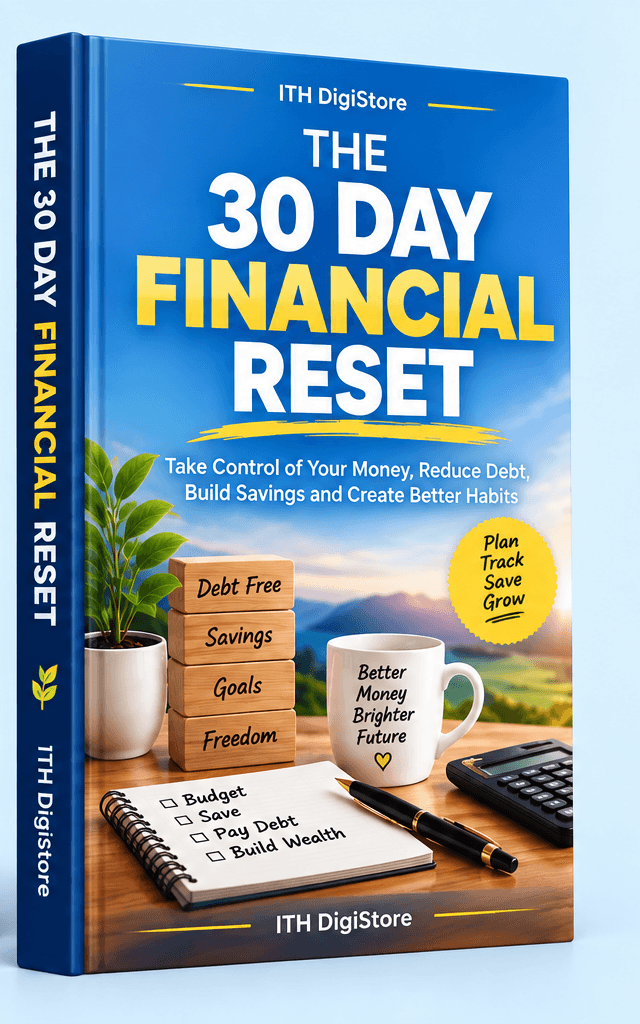
The Debt Freedom System — The 30 Day Financial Reset
A Practical 30 Day System to Organize Your Money, Reduce Debt, Build Savings and Create Better Financial Habits.
Bonus included: 100 Money-Saving Ideas + 50 AI Prompts for Personal Finance Organization
Educational and informational content only. Individual financial, tax, legal, credit, and debt circumstances vary. Review your actual account and loan terms and seek qualified professional advice where appropriate.

3 Products Picked For You
Enjoy 30% off every digital product with code 4CATA4BA2RA

ChatGPT Quick Cash
A practical guide to using ChatGPT for content creation, digital products, online opportunities, and exploring income online.
View Product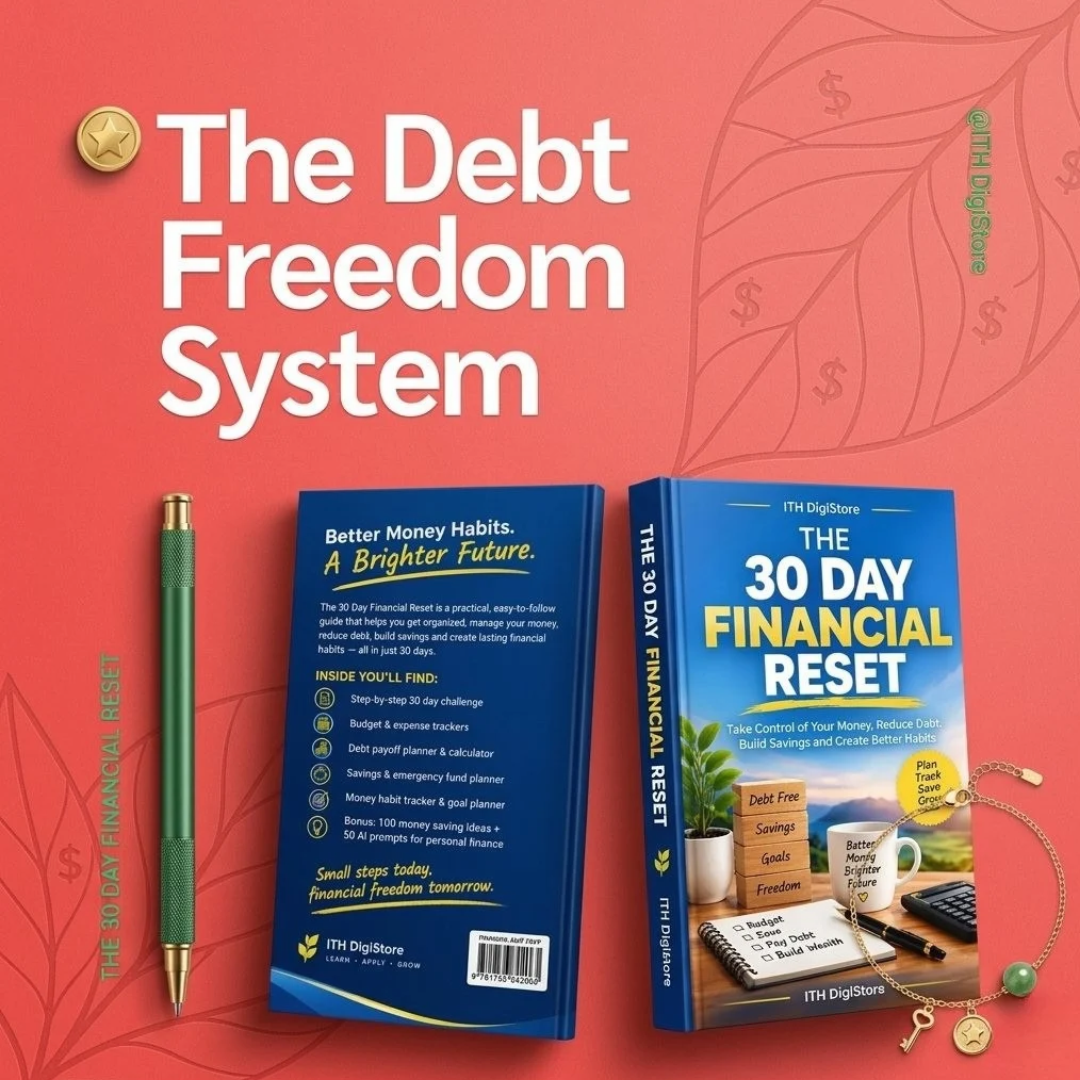
The Debt Freedom System
A 30 day financial reset to help you organize your money, understand spending, manage debt, and build better habits.
View Product
AI Skills for Beginners
A step by step guide to understand useful AI skills, explore practical tools, and apply AI in your personal or professional journey.
View Product




Discover Beautiful Digital Products
Explore a handpicked collection of digital assets designed to inspire, teach, and help you grow online.
Discover New Products
Choose from a wide range of digital assets
The Debt Freedom System
A Practical 30-Day System to Organize Your Money, Reduce Debt, Build Savings, and Create Better Financial Habits.
View ProductAI Skills for Beginners 2026
Practical guide will help you understand AI from the ground up and show you how to apply it to real opportunities.
View Product
Zero Data Internet Blueprint
Smart methods for accessing the internet without constantly using their mobile data.
View ProductChatGPT Quick Cash
Discover the fastest, simplest way to create and sell digital products that people actually buy. .
View Product

AI-Simple-Guide
Beginner-friendly resource that explain basics of AI in clear and easy-to-understand language.
View Product
7-Day Client Magnet™
Step-by-step sprint to attract and convert your first 10 qualified leads fast.
View Product
Ready to boost your creativity?
Join our satisfied customers and get instant access to our entire products.
Explore All Products3 Products Picked For You
Enjoy 30% off every digital product with code 4CATA4BA2RA
ChatGPT Quick Cash
A practical guide to using ChatGPT for content creation, digital products, online opportunities, and exploring income online.
View Product
The Debt Freedom System
A 30 day financial reset to help you organize your money, understand spending, manage debt, and build better habits.
View Product
AI Skills for Beginners
A step by step guide to understand useful AI skills, explore practical tools, and apply AI in your personal or professional journey.
View Product


Powered by: Ibk Technet Hub